

A clear puppy vaccination schedule helps you protect your pup early, avoid missed boosters, and plan vet visits with confidence. If you’re comparing puppy shots and wondering when to vaccinate a puppy, this guide walks you through the typical timeline, what each visit involves, and how to keep your puppy comfortable and safe.
Use it as a practical checklist, then set reminders so nothing slips through the cracks.
Typical puppy vaccination timeline (weeks to months)
Most puppies start vaccinations when they’re very young, then receive a series of boosters a few weeks apart. Your puppy vaccination schedule may vary based on age at first visit, health, lifestyle, and local disease risk, so treat this as a guide and follow your vet’s plan.
- 6–8 weeks: First vaccination is often given around this age, especially for puppies leaving a breeder or rescue.
- 10–12 weeks: Booster dose to build stronger immunity as maternal antibodies fade.
- 14–16 weeks: Final puppy booster for many core vaccines, helping complete the primary series. Some pups may be advised to continue later if risk is higher.
- 6–12 months: An adolescent booster is commonly scheduled to reinforce protection into adulthood.
Why the final dose matters: It’s easy to think “close enough” after the earlier boosters, but the last puppy vaccination is often the dose that closes common immunity gaps. In many cases, full protection takes about 1–2 weeks after the final puppy vaccine, so plan outings and group settings with that in mind.
If you’ve adopted an older puppy and don’t have reliable records, the clinic may recommend starting (or restarting) the series. That can feel repetitive, but it’s often the safest way to ensure your puppy has a complete, well-documented course.
While you’re planning appointments, it’s also a smart time to stock up on essentials like a gentle puppy shampoo, training treats, and a safe crate setup. You can browse basics in our puppy supplies range.
Core vs optional vaccines (what they often cover)
Vaccines are usually grouped into core (recommended for most puppies) and optional (added depending on lifestyle and exposure). Your vet will recommend what’s appropriate for your puppy.
- Core vaccines: These commonly protect against serious viral diseases such as parvovirus, distemper, and infectious hepatitis (adenovirus). Depending on your local protocols, you may hear core courses described with shorthand labels (for example, a “3-in-1” style core course).
- Optional (risk-based) vaccines: These may be added for puppies likely to encounter higher exposure, such as those attending daycare, group classes, grooming, boarding, or high-contact environments. Common examples include vaccines covering Bordetella and parainfluenza, which are often associated with kennel cough–type illness.
When you’re reviewing your puppy’s plan, ask your vet to explain:
- which diseases are included in your puppy’s core course,
- whether any extras are recommended based on your routine, and
- what documentation you’ll need for services like daycare or boarding.
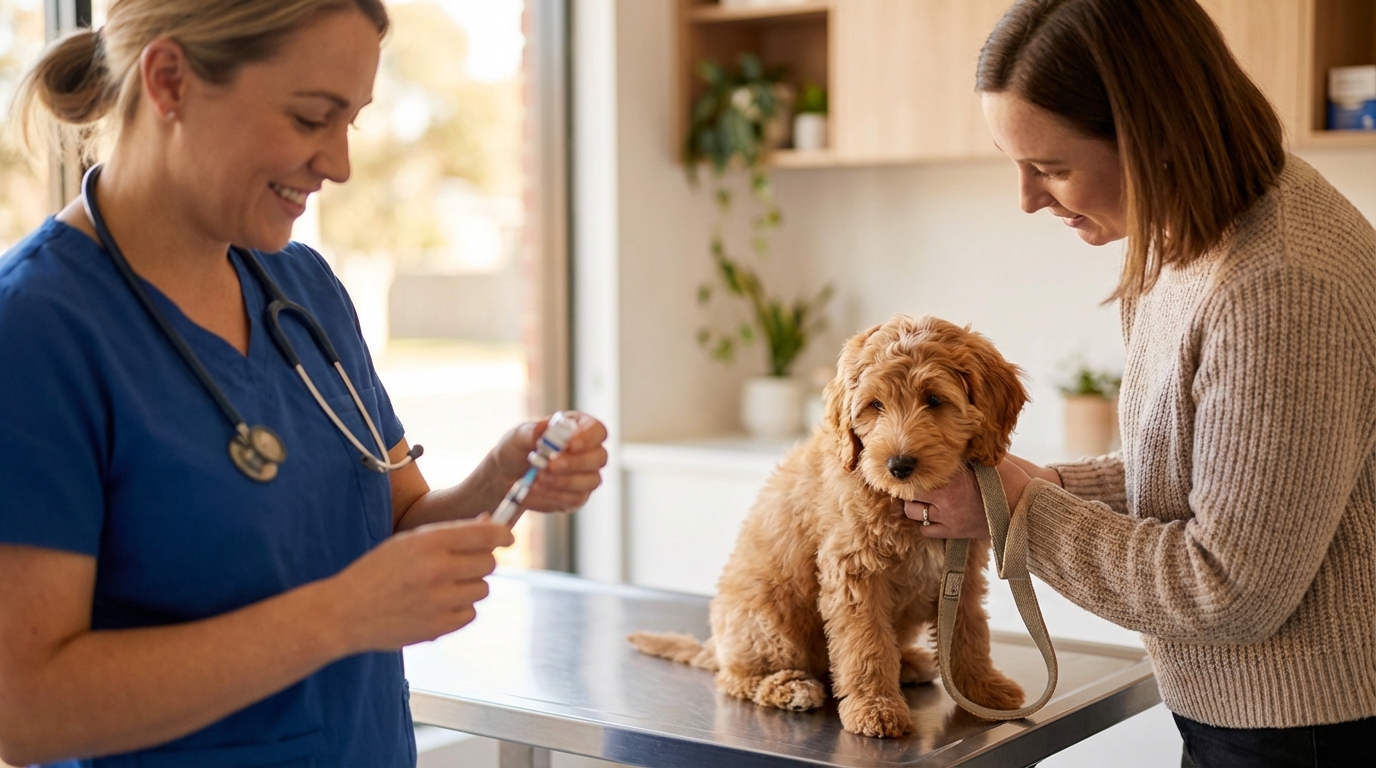
What happens at each appointment
Each vaccination visit is usually quick, but it’s more than “just a needle”. Expect a brief health check first, then the vaccine(s), plus a short discussion of home care and prevention.
- Health check: Weight, eyes/ears, heart and lungs, skin and coat, and a general check for signs of illness (vaccines may be postponed if your puppy is unwell).
- Vaccine plan: Core vaccines are typically prioritised, with optional vaccines discussed based on lifestyle and likely exposure.
- Parasite prevention chat: Many vets align vaccination visits with flea, tick, and worming plans because it’s easier to remember everything together.
- Record keeping: You’ll receive an updated vaccination record. Keep it handy for training classes, daycare, boarding, and grooming requirements.
If you’re comparing puppy shots, keep in mind that different clinics may use slightly different product combinations and appointment spacing, but the goal is the same: consistent boosters at the right intervals and a completed primary course.
Quick tip: Book the next booster before you leave the clinic, then set a phone reminder for 48 hours beforehand so you don’t miss the recommended window between doses.
Aftercare, common side effects, and safety red flags
Most puppies bounce back quickly after vaccines, but mild side effects can happen. Plan a quiet day afterwards, keep exercise gentle, and keep an eye on energy levels.
- Normal, short-lived reactions: Sleepiness, reduced appetite, mild soreness at the injection site, or a small lump that settles over time.
- Comfort measures: Offer water, keep play calm, and avoid rough handling around the injection site if it seems tender.
- Watch and record: If you notice anything unusual, note the timing and symptoms so you can describe them clearly if you call the clinic.
Safety disclaimer: While serious reactions are uncommon, they can happen. Seek same-day veterinary advice (or urgent/emergency care if symptoms are severe) if your puppy develops facial swelling, hives, repeated vomiting or diarrhoea, collapse, weakness, or breathing difficulty, especially if signs appear within hours of vaccination.
Try not to schedule a big outing the same day. A calm routine helps your puppy associate the vet with safety and comfort, not overstimulation.
Keeping your puppy safe between shots
One of the most common questions is when it’s safe to start exploring. Until your puppy has completed their initial series and had time to respond, they may not be fully protected, so choose low-risk experiences that still support healthy socialisation.
- Socialisation without high exposure: Invite healthy, fully vaccinated dogs to your home or a clean, private yard rather than busy dog parks.
- Training foundations: Start leash skills, handling practice (paws, ears, mouth), and reward-based training indoors.
- Hygiene habits: Wash bedding regularly, clean bowls daily, and pick up waste promptly to reduce germ load.
- Parasite protection: Fleas, ticks, and worms don’t wait for vaccinations. Keeping prevention consistent supports your puppy’s overall wellbeing.
It’s easier to stay consistent when you keep supplies organised. Create a small “puppy care station” with wipes, grooming tools, treats, and your prevention products from our puppy supplies section.
As your puppy nears the end of their vaccination course, you can gradually widen adventures with controlled outings and positive, calm introductions to new people and places. If you’re booking daycare, grooming, or group training, ask what proof of vaccination they require and when they consider a puppy ready to attend.
Frequently Asked Questions
When is a puppy fully vaccinated?
Many puppies are considered fully vaccinated after they complete the final booster in their initial series (often around 14–16 weeks), plus about 1–2 weeks for immunity to build. Some puppies may be advised to continue later depending on risk, so it’s best to confirm the finish line with your vet.
What if my puppy is late or misses a booster?
It’s common for schedules to slip due to travel, illness, or appointment availability. Contact your clinic to rebook as soon as possible; they’ll advise whether you can continue the series or need to restart part of it to ensure reliable protection.
Core course vs “extras”: what’s the practical difference?
Core vaccines are generally recommended for most puppies because they protect against widespread, high-impact diseases. Optional vaccines are added when your puppy’s lifestyle increases exposure risk (for example, frequent contact with unfamiliar dogs). Your vet can explain what’s included in your puppy’s course and whether any additional cover is worthwhile.
Can my puppy meet other dogs before the full series is finished?
Yes, with sensible precautions. Choose healthy, vaccinated dogs and controlled, clean environments, and avoid high-traffic areas where many unknown dogs have been.
Do indoor puppies still need vaccinations and parasite prevention?
Yes. Many infectious risks can be carried in on shoes, clothing, or visiting pets, and parasites can still find their way indoors. A preventative routine supports long-term health, even for homebody pups.
Ready to prepare for each visit and recovery day? Stock up on everyday essentials in our puppy supplies collection, and chat to your vet if you need help tailoring the schedule to your puppy’s age and lifestyle.